SARWAR FOLK MUSIC A UNIT OF SARWAR FOLK MUSIC AND RURAL DEVELOPMENT INSTITUTE Book a Performance

MUSIC • HERITAGE • TRADITION

The Sound of Rajasthan.

Discover the musical traditions, instruments and living heritage that form the heart of Rajasthan's folk music and the Manganiyar tradition.

TRADITIONAL INSTRUMENTS

Instruments that give folk music its voice.

Rajasthan's folk traditions are deeply connected with their instruments. Each instrument carries its own sound, technique and cultural character. Together, they create the distinctive musical landscape of the region.

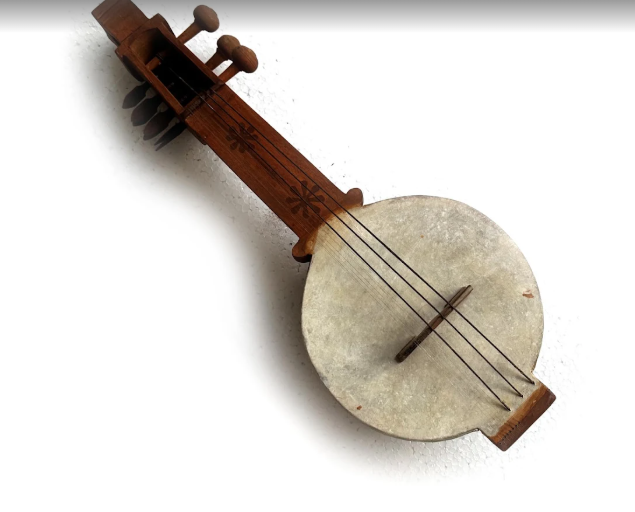
Kamayacha traditional Rajasthani instrument
01 • STRING INSTRUMENT

Kamayacha

Kamayacha is an elegant bowed string instrument associated with the professional singing communities of Marwar, particularly the Manganiyar tradition.

It has a large circular resonating body covered with parchment, a peg system and a fingerboard. Traditionally, it has three main gut strings along with additional suppletory and sympathetic steel strings, all passing over a broad bridge.

The long curved wooden bow, traditionally strung with horse-tail hair, is moved across the strings to produce its characteristic sound.
Traditional character: A distinctive bowed instrument central to the musical sound of the Manganiyar community of Marwar.
Khartal traditional folk percussion instrument
02 • PERCUSSION

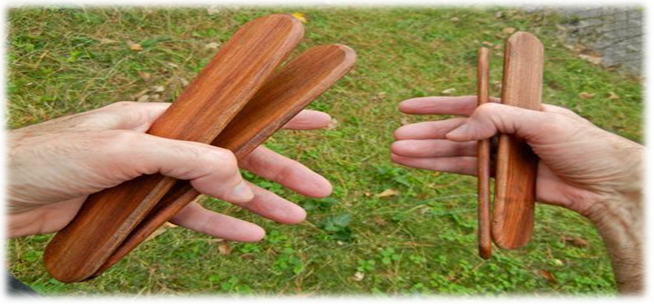
Khartal

Khartal is an ancient hand percussion instrument widely used in devotional and folk music. The name is derived from the Hindi words 'kar' meaning hand and 'tal' meaning rhythm or clapping.

Usually made from wood, the instrument consists of pieces that are held in the hands and struck or clapped together to create rhythmic patterns.

Khartal is especially valued for its portability and its ability to produce rapid and complex rhythmic accompaniment.

Traditional character: A compact rhythmic instrument capable of creating energetic and intricate folk rhythms.
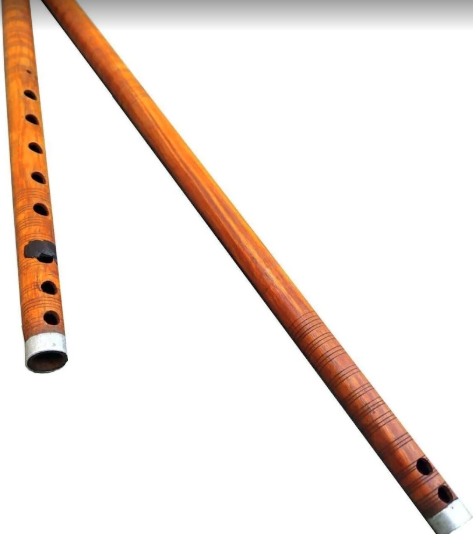
Murli Indian bamboo flute
03 • WIND INSTRUMENT

Murli / Bansuri

The Indian bamboo flute, commonly known as Bansuri, is one of the ancient wind instruments of India and has a long association with Indian musical traditions.

It is generally made from a straight, smooth bamboo tube with finger holes. The player produces different notes by controlling the airflow and covering the finger holes.

The instrument allows musicians to create subtle musical expressions and ornaments through specialised fingering and breath control.

Traditional character: A naturally resonant bamboo instrument known for its warm and expressive tone.
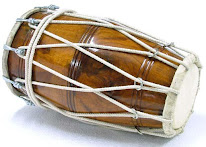
Dholak Indian folk drum
04 • PERCUSSION

Dholak

Dholak is one of the most widely used drums in Indian folk music. It is a double-headed drum with a smaller, higher-pitched head on one side and a larger bass head on the other.

Traditional dholaks may use lacing systems for tuning, while modern versions can incorporate mechanical tuning arrangements.

The body is commonly crafted from wood, and the quality of the shell, membranes and craftsmanship contributes greatly to the instrument's tone.

Players use different hand and finger techniques to create both powerful rhythms and detailed rhythmic patterns.

Traditional character: A versatile folk drum used to provide rhythmic foundation and accompaniment.
Algoza double flute folk instrument
05 • WIND INSTRUMENT

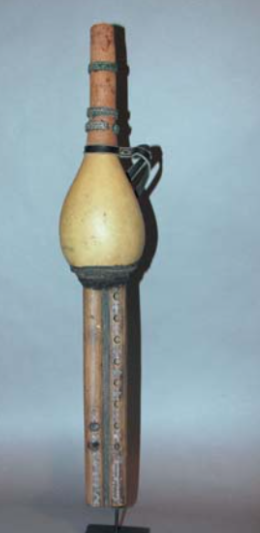
Algoza

Algoza, also known as Algoja, is a traditional double flute made from bamboo. It is found in the folk traditions of Rajasthan, Punjab and northern India.

The instrument consists of two flutes played together. One flute commonly provides a continuous drone while the other produces the melodic notes.

Playing the Algoza requires careful breath control. The musician must manage breathing while maintaining an uninterrupted flow of sound.

Traditional character: Its two-flute construction creates a distinctive combination of melody and drone.
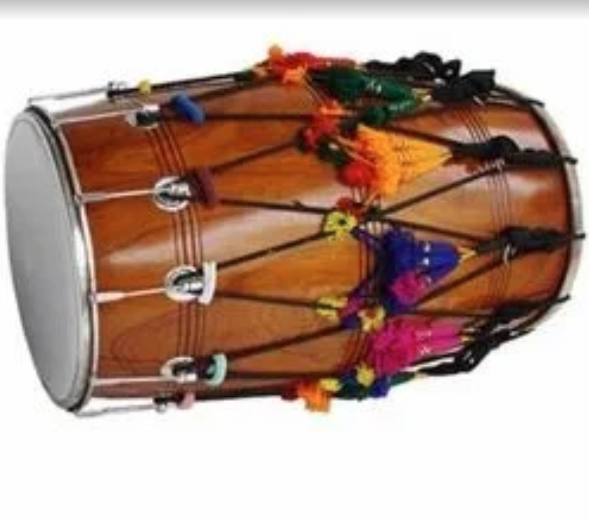
Dhol traditional folk drum
06 • PERCUSSION

Dhol

The Dhol is a large double-headed folk drum traditionally played with two sticks. It is an important percussion instrument in several North Indian folk traditions.

The larger bass side is played with a thicker curved stick, while the other side is played with a thinner and more flexible stick.

The drum is normally carried using a strap around the player's neck or shoulder. Its powerful sound makes it particularly suitable for festive and dance performances.

Traditional character: A powerful rhythmic instrument strongly associated with folk celebrations and dance.
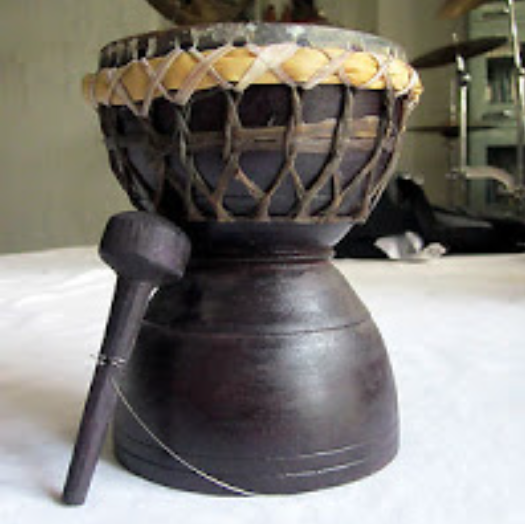
Bhapang traditional Rajasthani percussion instrument
07 • STRING PERCUSSION

Bhapang

Bhapang is a rare single-stringed percussion instrument traditionally associated with the Mewati community of Rajasthan.

It is sometimes described as a 'talking drum' because of its distinctive oscillating tone. A gut string passes through a skin membrane and is connected to a wooden handle.

The musician holds the wooden handle and plucks the string while controlling its tension with the hand. This produces slides, oscillations and expressive variations in pitch.

Traditional character: Its changing pitch and expressive sound give the Bhapang a distinctive musical voice.
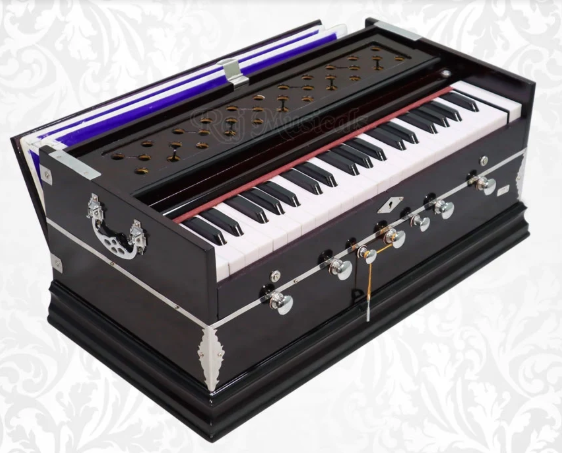
Harmonium Indian musical instrument
08 • KEYBOARD INSTRUMENT

Harmonium

The harmonium is a free-reed keyboard instrument that has become an important accompanying instrument in many Indian musical traditions.

Sound is produced by air passing through metal reeds. The musician operates hand bellows while using the keyboard to produce different notes.

In folk, devotional and performance music, the harmonium is commonly used to support singers and provide melodic accompaniment.

Traditional character: A practical melodic accompaniment instrument used widely across Indian musical settings.
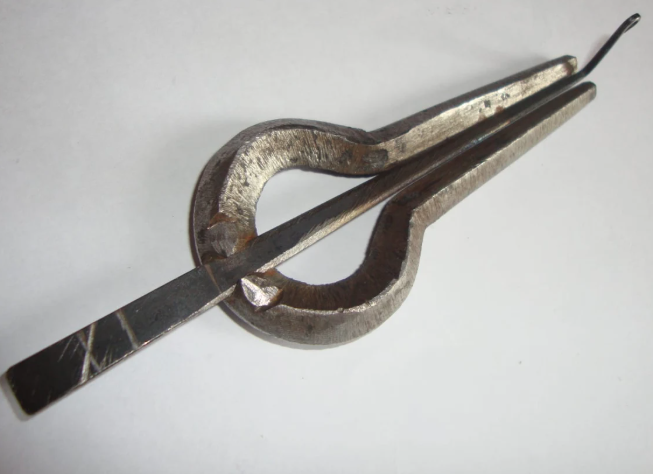
Morchang Rajasthani folk instrument
09 • JEW'S HARP

Morchang

Morchang is a small traditional mouth instrument associated strongly with the folk music of Rajasthan.

It consists of a metal frame with a flexible tongue in the centre. The instrument is held against the mouth and the tongue is plucked to produce its characteristic vibrating sound.

The player's mouth and oral cavity act as a resonating space, while changes in the shape of the mouth help create different tonal colours and rhythmic effects.

Traditional character: A compact and distinctive instrument known for its rhythmic pulse and resonant tone.
THE LIVING SOUND OF RAJASTHAN

Tradition carried forward through music.

These instruments are more than musical tools. They are part of a living tradition passed from generation to generation through artists, families and communities.

Watch Live Performances →